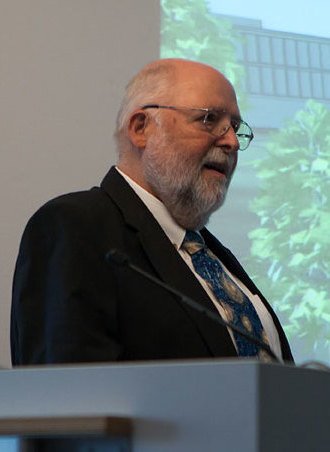
Klaus Tschira: A Visionary Among Germany's Richest
The story of Germany's economic prowess is often intertwined with its technological innovators, and few figures embody this narrative more profoundly than Klaus Tschira. As one of the pioneering co-founders of SAP AG, a global software giant, Tschira's journey from a small team of former IBM employees to a multi-billionaire is a testament to foresight, innovation, and unwavering dedication. While his name might not always resonate as loudly as some other tech magnates, his impact on the global enterprise software landscape, and consequently his significant personal fortune, solidifies his place among Germany's wealthiest individuals. This article delves into the remarkable
Klaus Tschira net worth, the foundations of his wealth, and his enduring legacy.
The Genesis of a Software Empire: SAP's Foundations
To truly understand Klaus Tschira's immense wealth, one must first grasp the monumental scale and influence of SAP. Born from the minds of five visionary engineers – Dietmar Hopp, Hasso Plattner, Klaus Tschira, Claus Wellenreuther, and Hans-Werner Hector – SAP AG was founded in 1972 in Weinheim, Germany. These "Gang of Five," as they became known, had a bold idea: to develop standard application software for real-time data processing, a concept that was revolutionary for its time. They left IBM with a specific vision: to create a system that could integrate an entire company's business processes, from finance and human resources to production and supply chain management.
Klaus Tschira's role within this nascent company was pivotal. A brilliant mathematician and computer scientist, Tschira was deeply involved in the technical architecture and development of SAP's early systems. His methodical approach and focus on robust, scalable solutions were instrumental in building the foundational strength of SAP's product line. From its humble beginnings, SAP quickly grew, developing its flagship R/1, R/2, and later the globally recognized R/3 system, which became the industry standard for Enterprise Resource Planning (ERP) software. This software allowed companies to streamline operations, gain unprecedented insights into their data, and ultimately operate with far greater efficiency. The widespread adoption of SAP's solutions by countless multinational corporations transformed the business world and laid the groundwork for the substantial fortunes of its founders, including the impressive
the $13.1 billion fortune of SAP's Klaus Tschira.
Unpacking Klaus Tschira's Staggering Net Worth
At the height of his wealth, Klaus Tschira's net worth was estimated to be around
$13.1 billion. This staggering figure places him firmly among Germany's elite billionaires and highlights the incredible profitability and market dominance achieved by SAP over decades. The primary source of this immense wealth, as the reference context confirms, was unequivocally "software" – more specifically, his substantial equity holdings in SAP AG.
Here's a breakdown of how a fortune of this magnitude is typically accumulated and sustained:
*
Equity in SAP: As a co-founder, Tschira held a significant percentage of SAP shares. As the company grew from a startup to a global powerhouse with a market capitalization in the hundreds of billions of dollars, the value of his shareholding naturally skyrocketed. Even after going public and subsequent share dilutions, his remaining stake remained immensely valuable.
*
Dividends and Share Sales: Over decades, SAP, as a mature and highly profitable company, paid out substantial dividends to its shareholders. Tschira would have received billions in dividends over the years. Additionally, strategic sales of portions of his shares, perhaps to fund philanthropic endeavors or diversify his portfolio, would have contributed to his liquid assets.
*
Investment Growth: The proceeds from dividends and share sales would not have sat idle. These funds would have been reinvested in a diversified portfolio of assets, including other companies, real estate, and financial instruments, further compounding his wealth.
*
Long-Term Vision: Unlike many tech founders who cash out early, Tschira, along with his co-founders, maintained a long-term commitment to SAP. This dedication allowed them to ride the wave of the company's sustained growth, rather than missing out on future appreciation.
The "source of wealth: software" might seem simple, but it represents decades of relentless innovation, strategic business development, and the creation of essential infrastructure for the global economy. SAP's software became the backbone for thousands of businesses worldwide, making it an indispensable tool and creating immense value for its shareholders. The
Klaus Tschira net worth is a direct reflection of this profound impact.
Beyond Billions: Klaus Tschira's Enduring Legacy and Philanthropy
While his immense fortune is certainly noteworthy, Klaus Tschira's legacy extends far beyond the financial figures. Known for his modest demeanor and deep commitment to scientific research and education, Tschira channeled a significant portion of his wealth into philanthropic endeavors, most notably through the
Klaus Tschira Foundation (KTS).
Established in 1995, the Klaus Tschira Foundation is a non-profit organization dedicated to fostering natural sciences, mathematics, and computer science. Its primary mission is to promote public understanding and appreciation of these fields, from kindergarten through university and beyond. The foundation supports research, teaching, and knowledge transfer, aiming to ignite curiosity and foster future generations of scientists and innovators.
Key initiatives and impacts of the Klaus Tschira Foundation include:
*
Heidelberg Institute for Theoretical Studies (HITS): KTS founded and primarily funds HITS, a private, non-profit research institute conducting basic research in computer science and applied mathematics across various scientific domains.
*
Klaus Tschira Competence Center for Empirical Research Methods: This center provides training and support for researchers in empirical methods, crucial for data-driven scientific inquiry.
*
Supporting Science Communication: The foundation actively promotes efforts to make complex scientific topics accessible to a broader audience, bridging the gap between scientific communities and the general public.
*
Educational Programs: From school labs to student competitions, KTS invests heavily in programs designed to inspire young people's interest in STEM fields.
Klaus Tschira’s commitment to these areas was deeply personal. He believed that scientific literacy and robust research were fundamental to societal progress and Germany's competitiveness. His two sons, Udo and Harald Tschira, are also involved in continuing their father's legacy, often through their engagement with the foundation and its various initiatives. This dedication to giving back, particularly in the fields that underpinned his own success, paints a picture of a man driven by more than just financial gain. His philanthropic efforts ensure that his
the $13.1 billion fortune of SAP's Klaus Tschira continues to generate immense value for society long after his passing.
Lessons from a Software Visionary
Klaus Tschira's life offers several profound insights for aspiring entrepreneurs, technologists, and philanthropists:
*
The Power of Niche Innovation: SAP didn't try to be everything to everyone at first. It focused on solving a specific, complex problem for large enterprises: integrating business processes. This strategic focus allowed them to build deep expertise and dominate a crucial market segment.
*
Long-Term Vision Over Short-Term Gains: The founders of SAP committed to building a lasting company, not just a quick exit. This long-term perspective allowed the company to mature, adapt, and become an industry standard, ultimately leading to exponential wealth creation.
*
The Importance of Collaboration: The "Gang of Five" demonstrated the power of collective genius. Each founder brought unique skills and perspectives, creating a formidable team capable of tackling monumental challenges.
*
Giving Back Through Expertise: Tschira's philanthropy wasn't just about donating money; it was about investing in the very fields that enabled his success. By supporting natural sciences, mathematics, and computer science, he aimed to cultivate the next generation of innovators who could build upon his legacy.
Conclusion
Klaus Tschira's journey from a co-founder of a fledgling software company to a multi-billionaire with an estimated
Klaus Tschira net worth of $13.1 billion is a compelling narrative of technological vision, entrepreneurial spirit, and impactful philanthropy. His legacy is not merely defined by the vast fortune he accumulated from SAP, but equally by his unwavering commitment to advancing scientific research and education through the Klaus Tschira Foundation. He stands as a testament to how profound technological innovation can not only generate immense personal wealth but also serve as a powerful catalyst for societal progress, leaving an indelible mark on Germany and the world.